The Practical GEO Checklist We Use on TopBlogs in 2026

September 22, 2026 · 8 min read
A few months back, one of us typed a question into ChatGPT, a question we had a page one Google ranking for. Not top three. Position one. We'd fought for that spot for the better part of a year, tracked it in Search Console like it owed us money, celebrated when it finally stuck.
ChatGPT didn't mention us. Neither did Perplexity. Gemini cited two competitors we routinely outrank on Google and, honestly, don't think are as good.
That's where this checklist came from. No conference talk, no "GEO is the new SEO" LinkedIn post kicked it off. Just sitting there refreshing a chat window, a bit annoyed, wondering what the point of ranking even is if the person asking the question never sees a results page.
We run TopBlogs as two people. Hanzla builds the thing, the site, the backend, whatever we're shipping that week. Malik runs the marketing and watches where the traffic, or lack of it, actually comes from. So when a chunk of our best content started going invisible to an audience search engines used to hand us for free, we didn't hire a GEO agency. We just started poking at our own posts to see what happened.
Here's what we've landed on. It's the process we actually run before we hit publish, not a theory we picked up from a webinar.
SEO vs GEO: what's actually different
Quick version, because half the content on this topic makes it sound more complicated than it is.
SEO gets a page ranked so a human clicks a blue link and lands on your site. GEO is a bit different, it's whether an AI model actually pulls from your page or names it when someone asks a question directly, no click involved at all. Some people call it AEO, answer engine optimization, same idea either way.
Google's current Search Central guidance says existing SEO fundamentals still apply to AI Overviews and AI Mode, and that there's no separate technical checklist or special schema required for these features. Basically: unique content, clear presentation, stuff that actually helps the user, none of that changed.
We mostly buy that, though not completely. Ranking well helps get you cited, since Overviews lean heavily on pages already doing okay organically. But we've written pages that rank fine and still don't get a single clean quote pulled from them. Happened to us more than once before we noticed the pattern.
Three patterns we've consistently seen in AI citations
We looked for real data instead of trusting our gut, because our gut has been wrong about SEO plenty of times. A few patterns kept showing up across independent studies this year, and they match what we've seen on our own posts.
Original, specific experience nobody else can write. This is the one place a two-person site has a real edge. We can't outspend a content team of twenty people. But we can describe exactly what happened when we migrated HandFace Live's face recognition pipeline and it choked on multi-face detection at scale: the actual error, the actual fix, the number we landed on for batch size. Nobody scraping the web can produce that from nowhere.
Self-contained answer blocks a model can lift cleanly. We noticed this by accident, actually, going back through old posts that weren't getting cited. If the first chunk of text under a heading needs three paragraphs above it to make sense, a model can't pull it out on its own. Something like 40 to 80 words that don't lean on anything above them tends to work better.
Third-party mentions. This is the uncomfortable one, because your own site isn't the whole game. A few recent studies, including a link analysis by Muck Rack across ChatGPT, Claude and Gemini and a separate correlation study by Ahrefs, land in roughly the same place: a large majority of AI brand citations trace back to third-party pages, not the brand's own domain, with Ahrefs putting brand mentions well ahead of backlinks as a predictor of AI visibility. Methodologies differ between these studies and neither is a controlled experiment, so treat the exact numbers as directional rather than precise. Still didn't love reading it. Means part of the work isn't just fixing our own page, it's getting other people to talk about it, and that's harder to control.
The checklist we run on every new TopBlogs post
This isn't a template we fill in blindly. It's more a set of checks we walk through before and after publishing, and a couple have already saved a post from going out half-baked.
Write the first 60 to 80 words under every H2 as a standalone answer. Before we write the supporting detail, we write the direct answer to whatever question that heading is implicitly asking. If someone pasted just that paragraph into a chat with no other context, would it make sense on its own? If not, we rewrite it.
Open every major section with the answer, not the setup. This one took real effort. Old habit, honestly, from writing blog posts that build up to the point for three paragraphs before saying anything useful. We just try to lead with the actual answer now and explain ourselves after. Reads a bit more like documentation. We're okay with that.
Add one original data point, screenshot, or a real "here's what we did" detail per post. Could be an actual error log, a before/after number from a campaign Malik ran, a config file from something Hanzla shipped. Whatever it is, it has to be something only we could have written, not something generic anyone could paste in.
Keep the page fast and actually crawlable. Boring one, but if the crawler feeding a model hits a slow or bloated page, it doesn't matter how good the writing is above. We check Core Web Vitals and make sure nothing important is buried behind JavaScript a crawler won't bother running.
Test the actual question across ChatGPT, Gemini, Perplexity, and Google AI Overviews after it goes live. Not a related question. The exact thing a reader would type. We check the same week we publish, then again roughly a month later once it's had time to get picked up.
See who's getting cited instead of us, and do one thing about it. If a competitor shows up and we don't, we look at why their page is stronger, usually it's more specific or better structured, occasionally it's just been up longer. Then we either reach out to a site that could plausibly mention us in a similar roundup, or rewrite our version. One action per gap. Neither of us has time for more than that.
Track mentions in a simple spreadsheet for the first 30 days. No dashboard subscription. Just the query, the platform, whether we were cited, and the date checked, plus whatever Search Console shows. Thirty days is usually enough to tell if a post is picking up traction or just sitting there.
What we deliberately ignore
Most GEO posts we read push the same four things. We tried them, or looked hard at the data behind them, and none of it convinced us they move much for a site our size.
Blanket schema markup on everything. We use schema where it's genuinely descriptive, Article and FAQ markup on pages where we actually have an FAQ. We don't wrap every page in every schema type available just because more structured data supposedly means more AI love. We haven't seen evidence for that.
Adding an llms.txt file and calling it a strategy. We have one. Took ten minutes to write. Google's own AI-features documentation says there's no special machine-readable file or markup required to show up in AI features, and we haven't seen evidence llms.txt is being read the way robots.txt once shaped crawler behavior. Cheap enough to add, but it's not something we'd count on.
Publishing a high volume of thin "AI-optimized" content. Easiest trap to fall into when you're two people trying to move fast. We'd rather ship six posts a month that each say something nobody else has said than twenty that all sound like they came off the same keyword list.
Relying on AI-visibility score tools as the strategy itself. We check one occasionally, mostly as a sanity check. Whatever number it spits out is somebody else's guess at what the engines want, not the engines telling us directly, so we treat it as a data point and move on rather than chasing the score up.
How this changes our Beginner's SEO Checklist
We didn't throw out our existing SEO checklist. Most of it still holds up, and Google's own guidance backs that up too. Keywords, internal linking, page speed, all of it still matters, arguably page speed more than before, since a slow page can get skipped at the retrieval stage before a model even gets to judge the writing.
What we added is one question at the very top of the process, ahead of everything else:
"Can an answer engine quote this page without the user needing to click?"
If the honest answer is no, we don't move on to headlines or meta descriptions or internal links yet. We go fix the structure first. Everything else on the old checklist still applies once that question gets a yes.
The part that's actually in our favor
We can't outspend anyone here. Twenty-person content teams will out-publish us and out-link us without trying hard. That's just the math of being two people.
But real experience keeps turning out to be the thing that earns a citation, and we have more of it per post than bigger sites do, just because most of what we publish comes straight out of work we're already doing anyway, on HandFace Live, on client campaigns Malik runs, on this site. We're not sitting down to invent stories for content. We're just writing down what happened.
We used to obsess over page one and stop there. Now we also check whether a model actually reads the page and quotes it, instead of grabbing the answer from whoever else it found.
One thing you can try today: open your last three published posts, find the first H2 in each, and read only the 60 to 80 words right after it. If that chunk doesn't fully answer the question on its own, that's worth fixing before anything else on this list.
Frequently asked questions
More to read
How AI Agents Went From Buzzword to Everywhere So Quickly
AI agents have gone from an AI buzzword to a major software trend in a surprisingly short time. From new agent frameworks and infrastructure to autonomous research, shopping, and business tasks, the technology is changing how software works and how people interact with it. But as agents become more capable, questions around safety, trust, and control are becoming just as important as the technology itself.
$ published Sep 23, 2026 · 5 min read · #ai #anthropic
 Hanzla Baig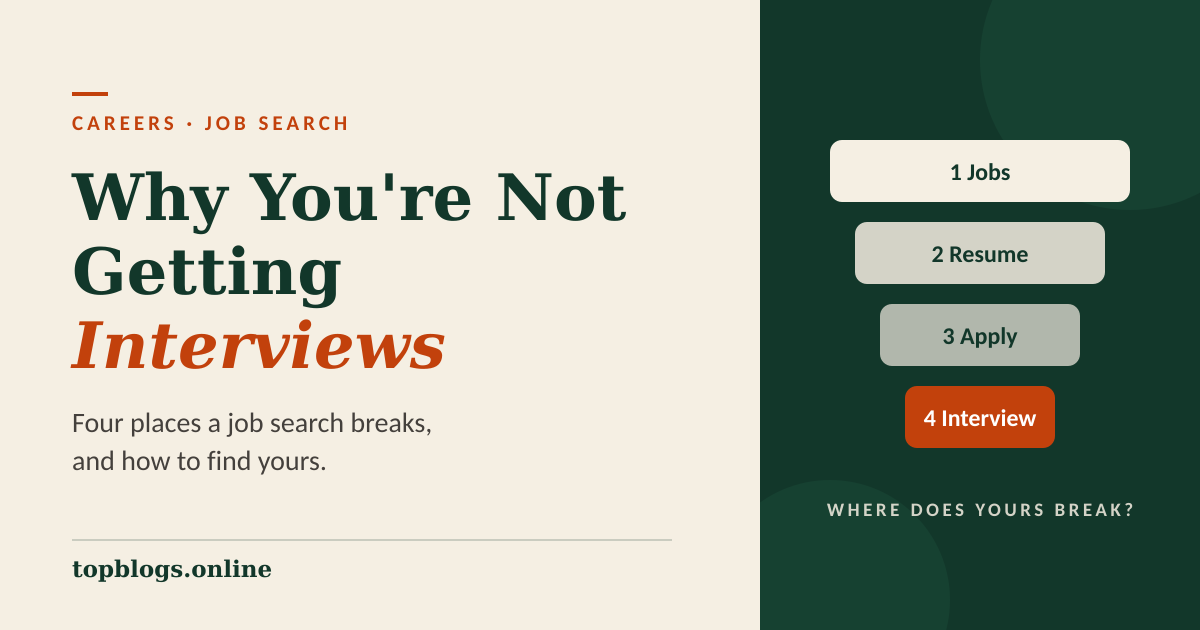
Why You're Not Getting Interviews (And It's Probably Not Your Resume)
One job seeker sent about 2,000 applications in a year and got interviews only through referrals. Here's what recent hiring data says about where a stalled search breaks, from the resume to the way you apply.
$ published Sep 21, 2026 · 7 min read · #remote-work #careers
Hanzla Baig